Style Atlas / Persian Qajar
Persian Qajar
A luminous Qajar palette of mirror mosaic, polychrome tile, lacquered wood, saturated carpets, and jewel-toned glass. Bright spring daylight activates the facets and color while clear plaster areas keep the effect ordered.
Persia19th centuryOpulentSpringDaylight
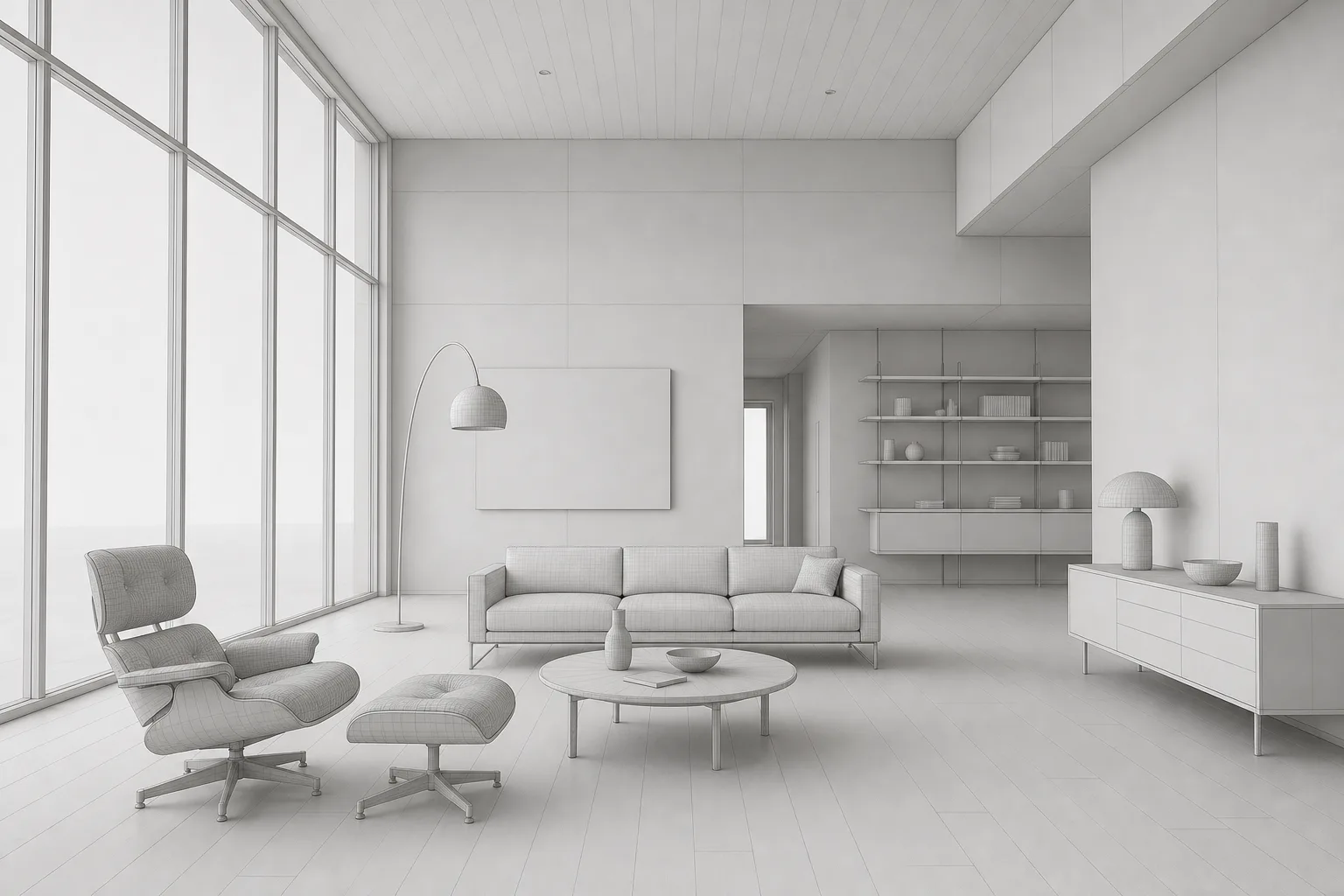
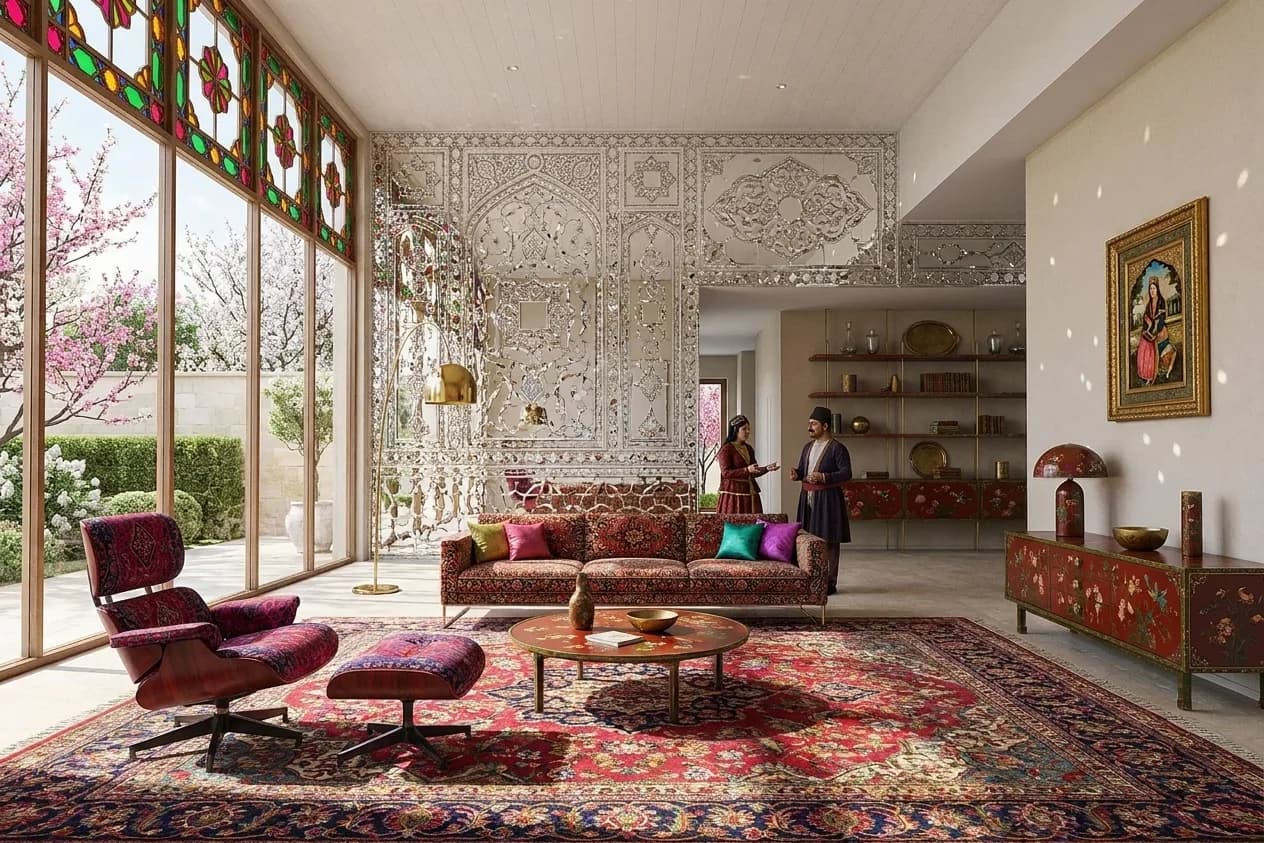
Same scene, same camera — only the style changes.
The composition
Applying this preset writes these five fields onto your project. Every one is editable after you apply it.
- Style
- Persian Qajar richness is translated through reflective surface craft, saturated color, and precisely bounded ornament. Aina-kari mirror mosaic appears as applied panels and joinery insets, catching light without changing the underlying walls or openings. Rose and polychrome tile, lacquered painted wood, jewel-toned glass, and dense carpets create a ceremonial register. The result is brilliant but ordered, with repeated facets and floral color balanced by clear areas of plaster, dark timber, and disciplined furniture placement.
- Scene
- The project sits within an Iranian spring setting of pale stone, flowering branches, clipped greenery, and clear highland air. The context may be urban or garden-like, but fresh color and a cultivated sense of refuge should remain legible. Thresholds mediate between sunlit surroundings and cooler shelter through reflected light, planting, and traces of water. The broader atmosphere is gracious, vivid, and composed, balancing ceremonial richness with the calm of a protected environment.
- Lighting & Atmosphere
- Bright spring daylight catches the small facets of aina-kari, scattering sharp silver highlights across adjacent plaster, tile, and carpet. Jewel-toned glass introduces controlled notes of ruby, amber, emerald, and cobalt without bathing the entire space in color. Reflectivity is concentrated and intricate rather than seamless. Shadows remain clear enough to preserve depth around furniture and textiles. The atmosphere is luminous, formal, and slightly theatrical, yet still credible as an occupied setting rather than a decorative spectacle.
- Materials & Textures
- Mirror mosaic uses small hand-cut facets with visible joints and subtle irregularity, applied in contained fields. Rose, turquoise, yellow, and cobalt tiles carry floral or figurative Qajar color, balanced by warm lime plaster. Lacquered wood introduces painted bouquets, fine borders, and dark polished edges. Carpets are dense and saturated in crimson, indigo, and green. Jewel-toned glass, aged brass, silk, and polished stone provide further highlights without replacing the tactile variation of handmade surfaces.
- Entourage & Activity
- Low upholstered seating, a lacquered table, and a saturated carpet form a composed gathering area. A brass tray, glass vessels, books, flowers, and a small painted box suggest ceremony mixed with daily use. One or two figures may converse or arrange flowers, dressed in quiet tones that do not compete with the surfaces. Spring branches provide a fresh counterpoint to mirrored sparkle. Any labels or signage are kept outside the principal decorative fields and rendered with minimal contrast.