Style Atlas / Art Nouveau
Art Nouveau
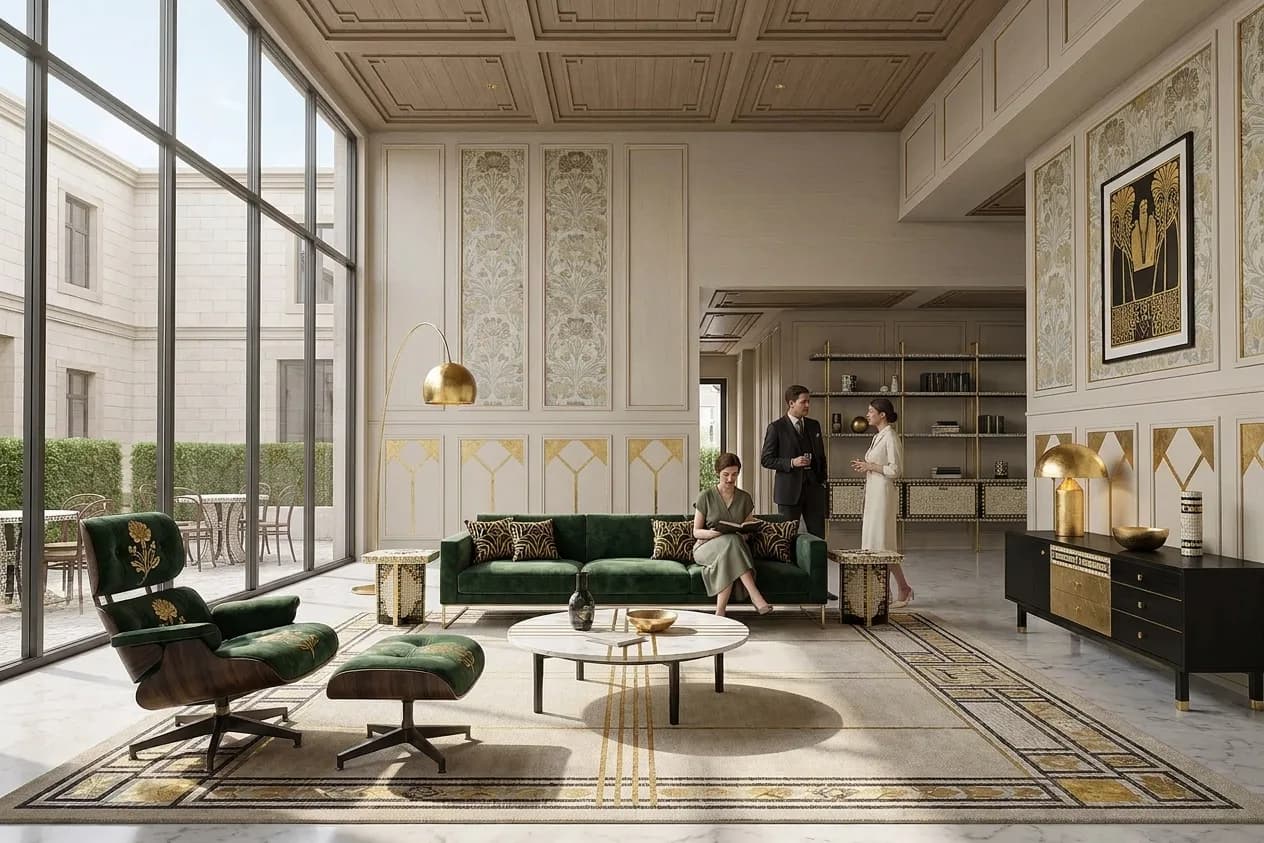
Art Nouveau translates organic movement into applied craft rather than altered structure. Botanical ironwork, marquetry, colored glass, and soft spring light give the fixed scene a coherent French-Belgian decorative character that remains elegant, tactile, and usable.
France & BelgiumEarly ModernOpulentSpringDaylight
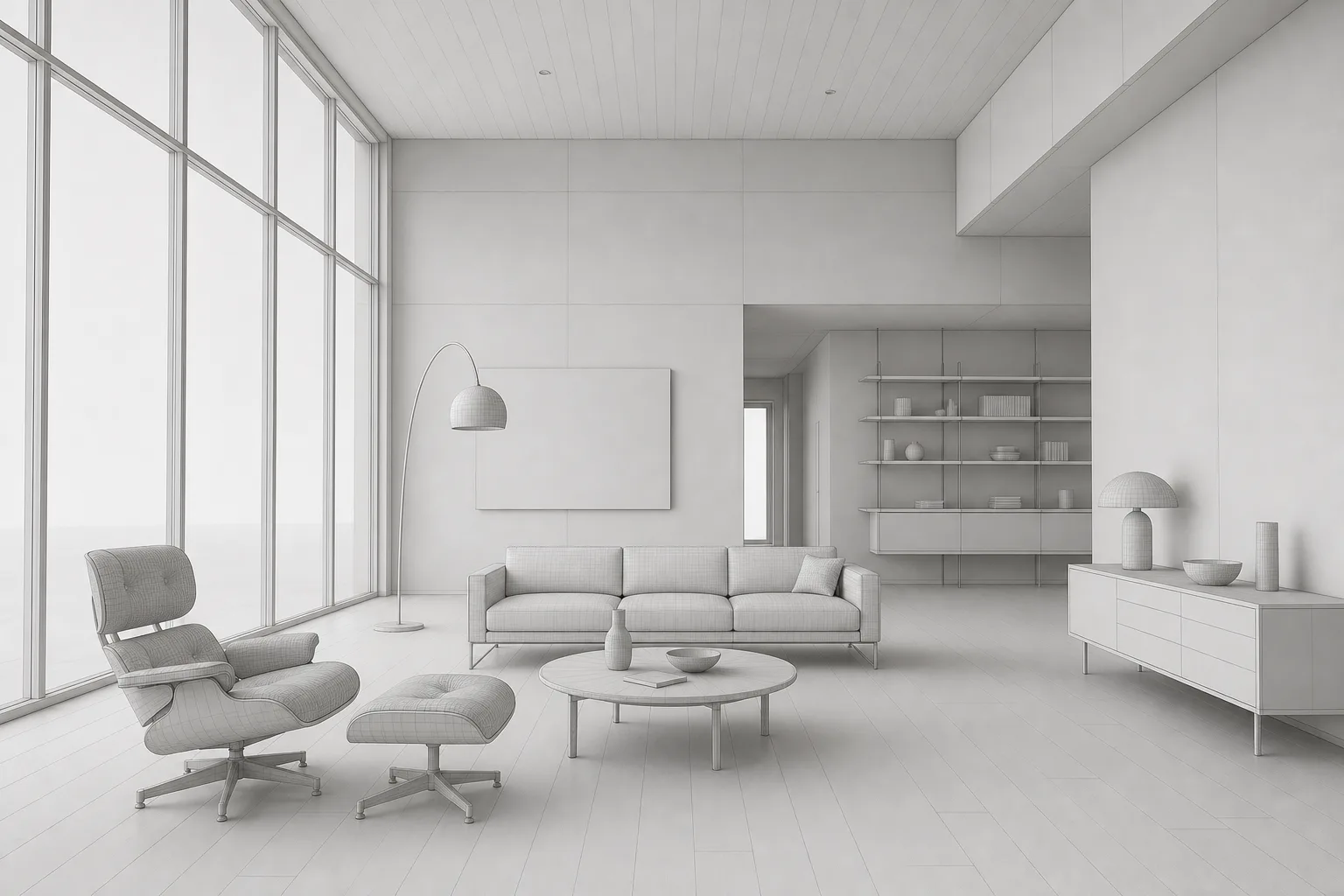
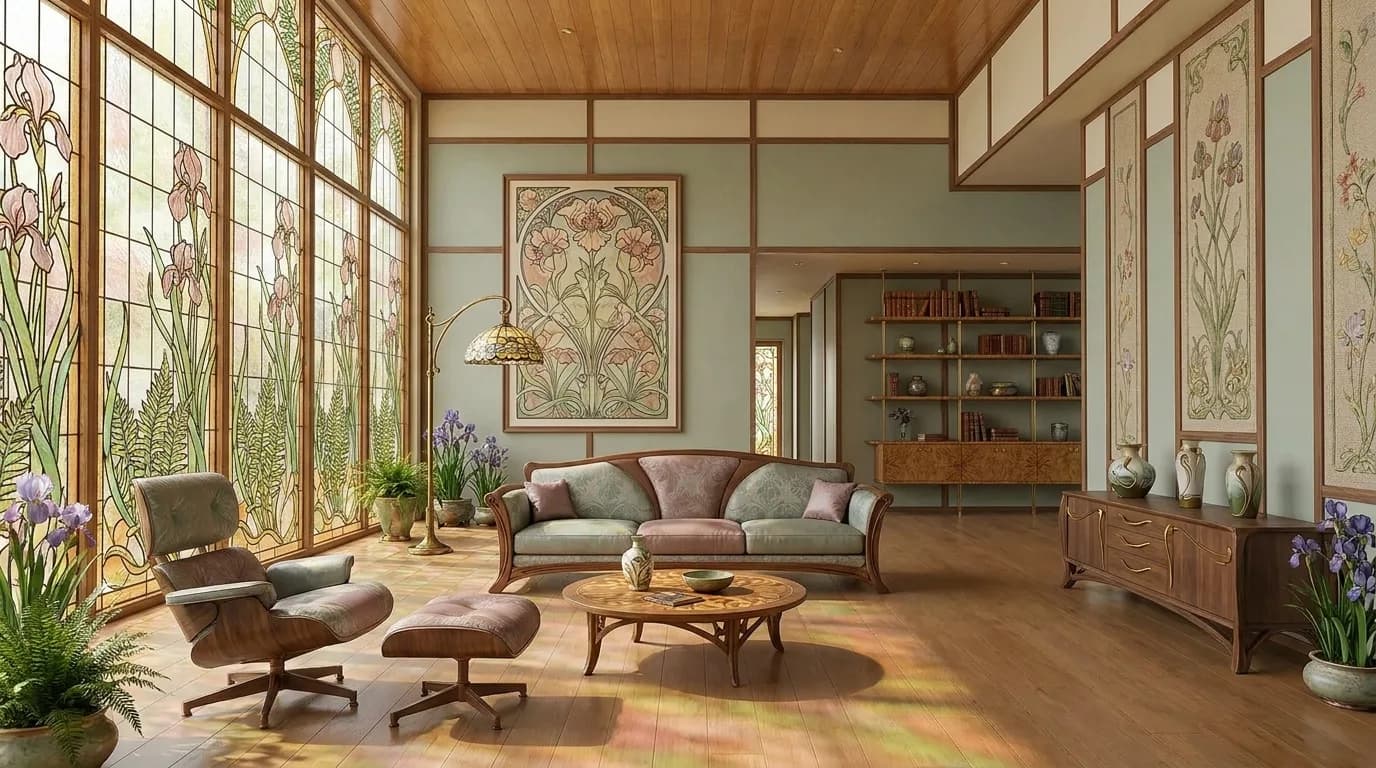
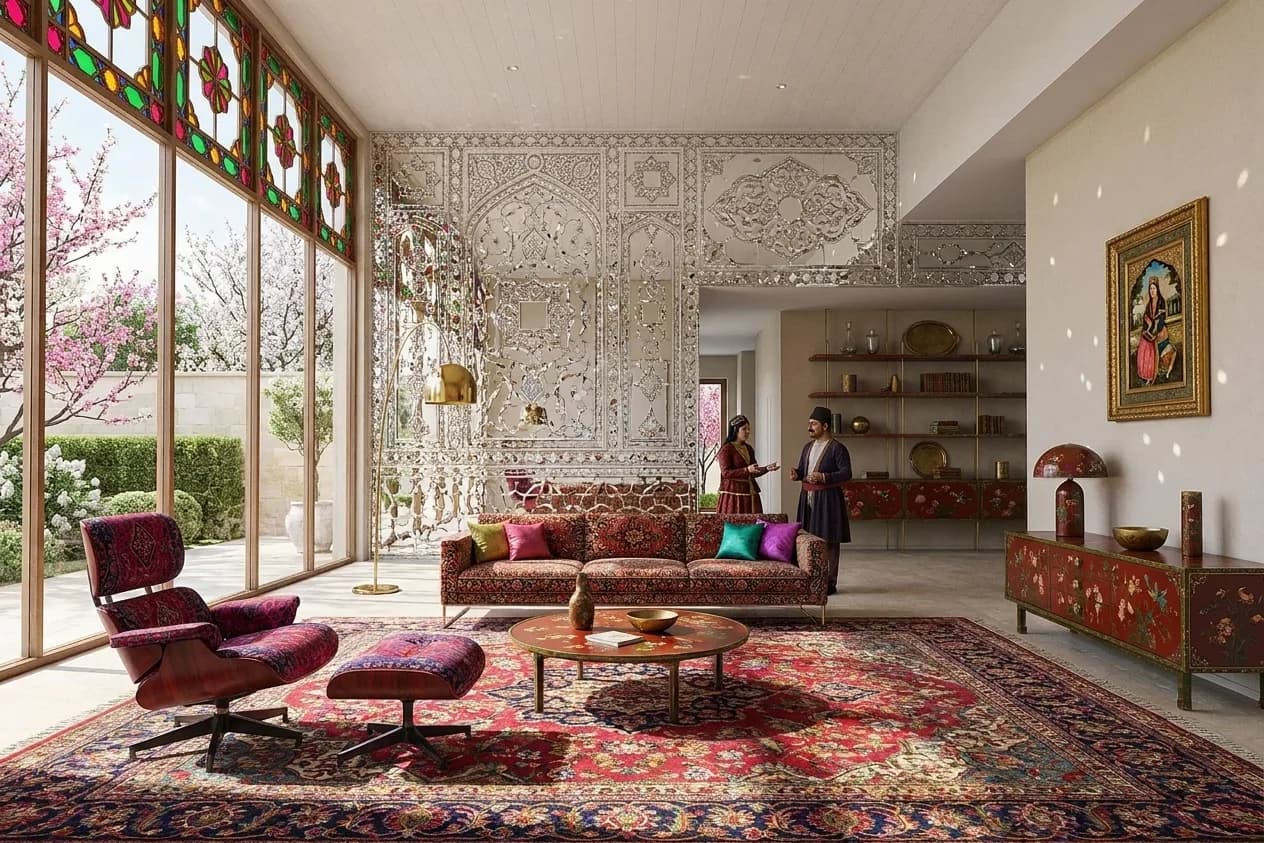
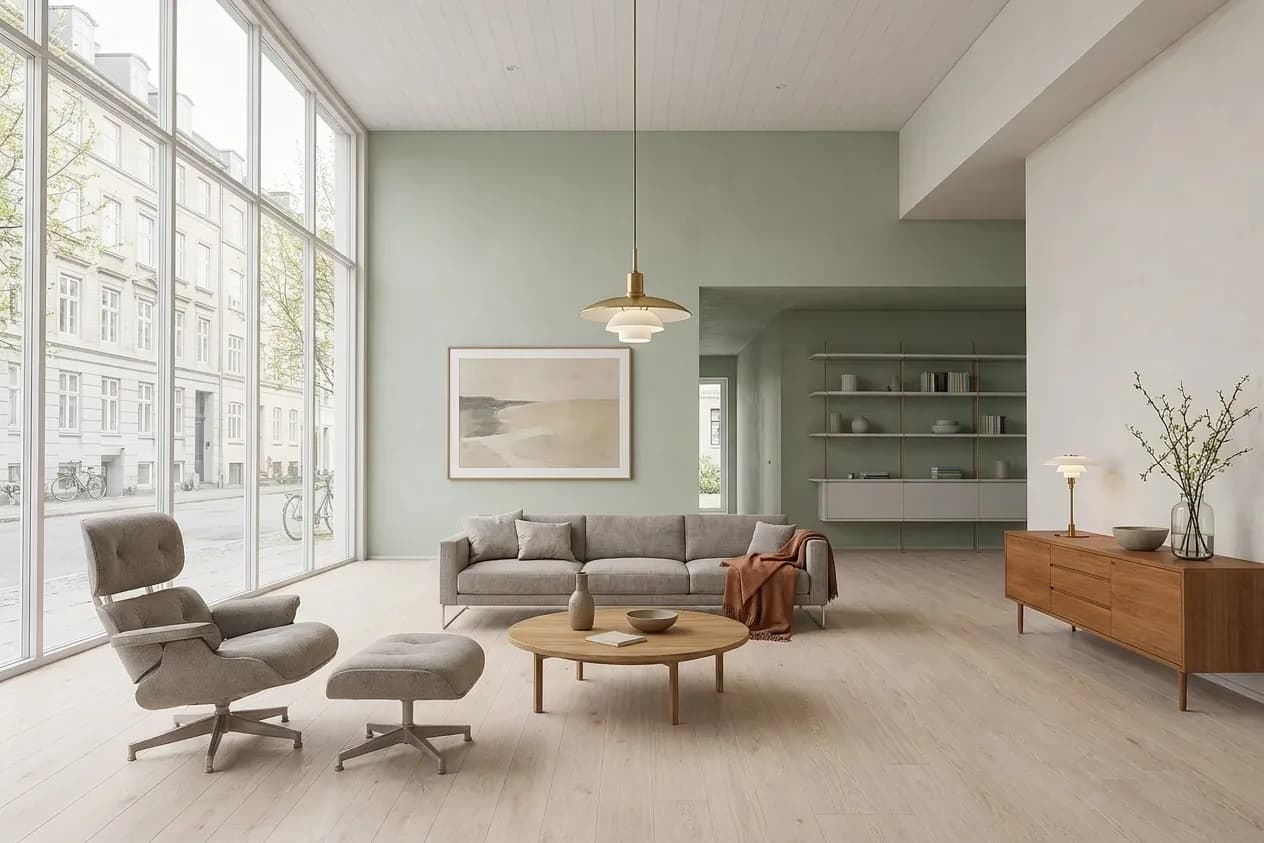
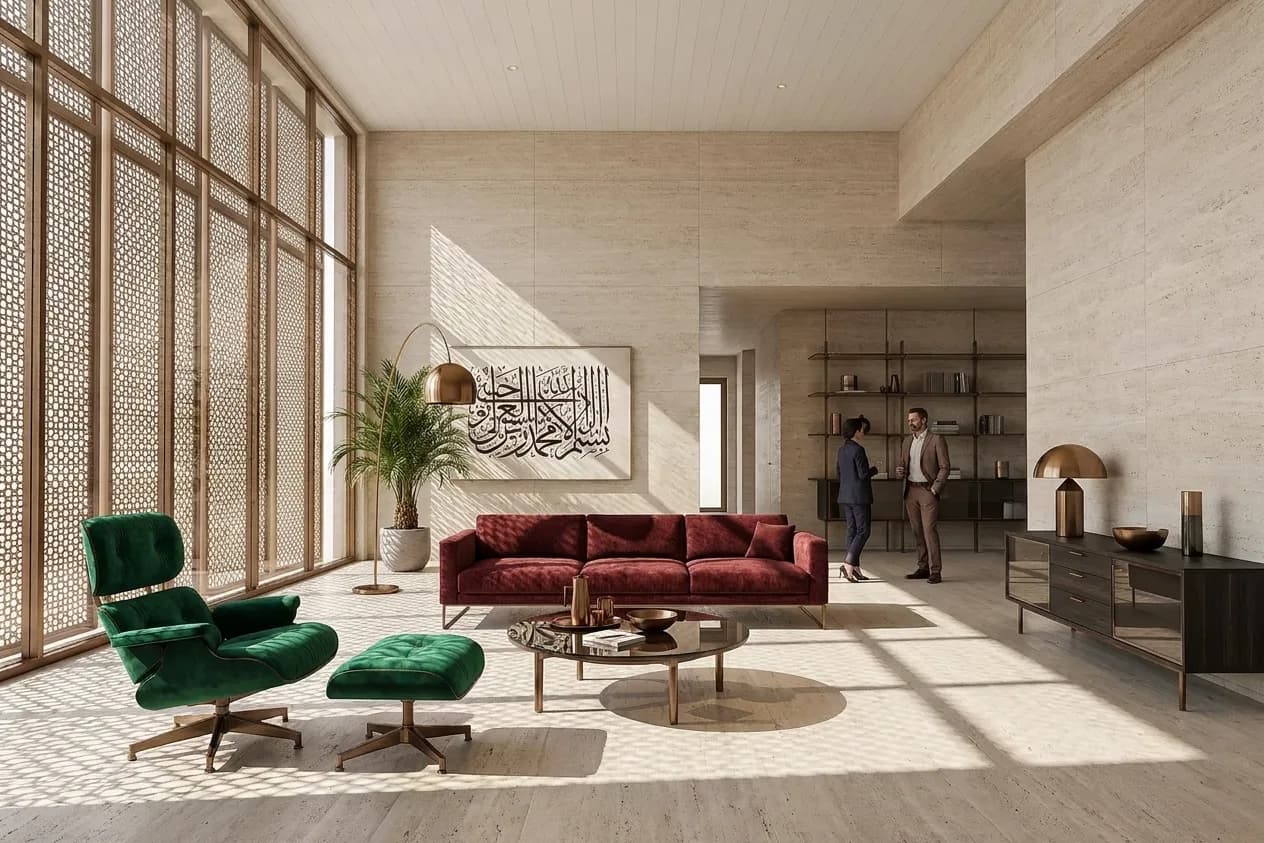
Same scene, same camera — only the style changes.
The composition
Applying this preset writes these five fields onto your project. Every one is editable after you apply it.
- Style
- Art Nouveau is expressed as a fluid decorative system laid over the existing envelope. Pronounced whiplash curves shape chair backs, table legs, cabinet fronts, shelving edges, and joined timber details without altering walls or openings. Botanical motifs appear abstracted rather than literal, balancing sensuous movement with disciplined craft. The result feels cultivated and immersive, rooted in French and Belgian decorative arts, with every applied detail connected by a continuous rhythm of stem, leaf, and bloom.
- Scene
- The project sits within an established European context where spring growth, pale masonry, rain-dark stone, and cultivated greenery soften the urban grain. Botanical abundance appears through mature planting and seasonal color rather than a fixed garden type. Thresholds should feel fluid and gently asymmetrical, carrying nature's rhythms between shelter and the wider environment. The broader atmosphere is elegant, organic, and slightly dreamlike, with moisture and foliage giving hard surfaces a living quality.
- Lighting & Atmosphere
- Soft spring daylight filters through stained-glass panels and patterned glazing film, casting muted pools of amber, green, and rose across nearby finishes. Illumination remains diffuse, with no harsh contrast; patinated brass lamps add warm localized notes as daylight fades. The atmosphere is fresh but composed, combining the clarity of a mild spring day with the intimate color shifts associated with decorative glass and polished wood.
- Materials & Textures
- Figured walnut, oak, and mahogany appear in veneered joinery and marquetry, finished to a low satin sheen. Patinated brass and dark botanical wrought iron define handles, lamp frames, screens, and furniture details. Stained glass uses translucent floral abstraction rather than pictorial scenes. Wall treatments favor muted celadon, cream, tobacco, and dusty rose, with embroidered silk, wool, and leather adding tactile depth. Framed wall art depicts a botanical composition with stained-glass-inspired linework and color, never a blank field.
- Entourage & Activity
- Low planters hold ferns, iris, or leafy branches that echo the ornament without turning the scene into a conservatory. Small tables carry ceramic vessels, books, and a few cut flowers. People, when present, wear restrained tailoring in cream, moss, ink, or muted plum. Activity is quiet and social: conversation, reading, or measured circulation, with decorative objects placed sparingly enough for the craftsmanship to remain legible.