Style Atlas / Egyptian Revival
Egyptian Revival
Interwar Egyptian Revival expressed through ebony, lapis, gold leaf, alabaster, and shallow applied motifs. Warm night lighting gives the existing shell a formal, intimate decorative order.
Egypt & EuropeInterwarDramaticAll-seasonNight
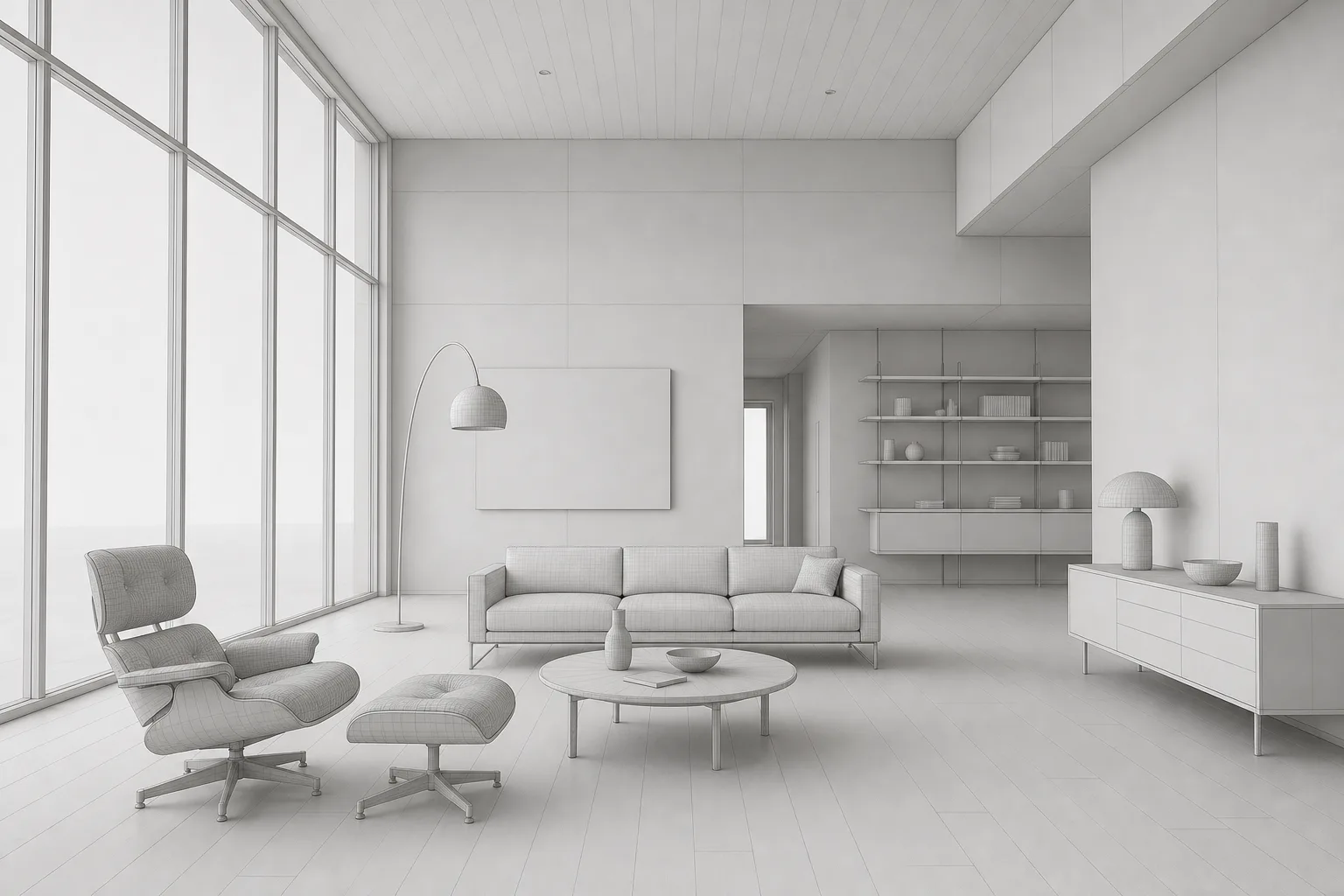
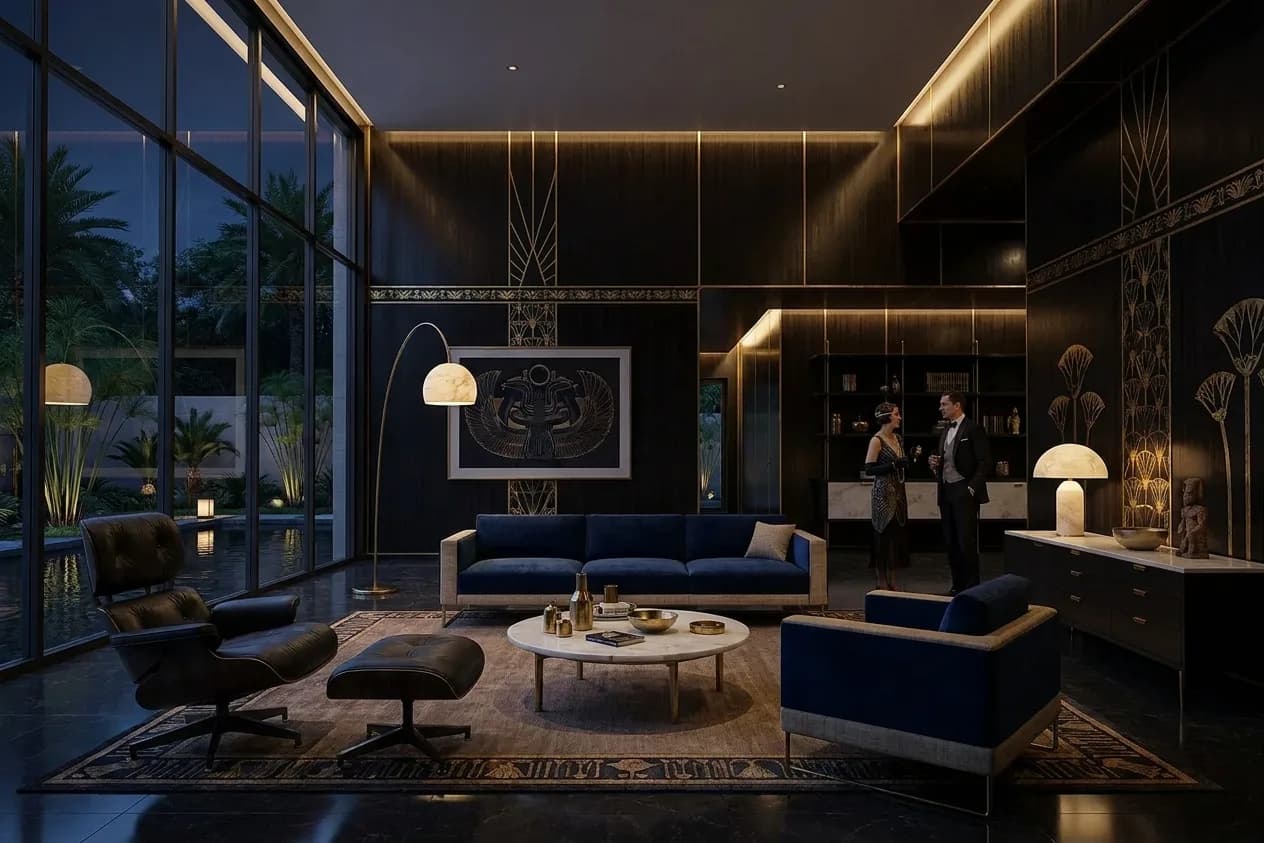
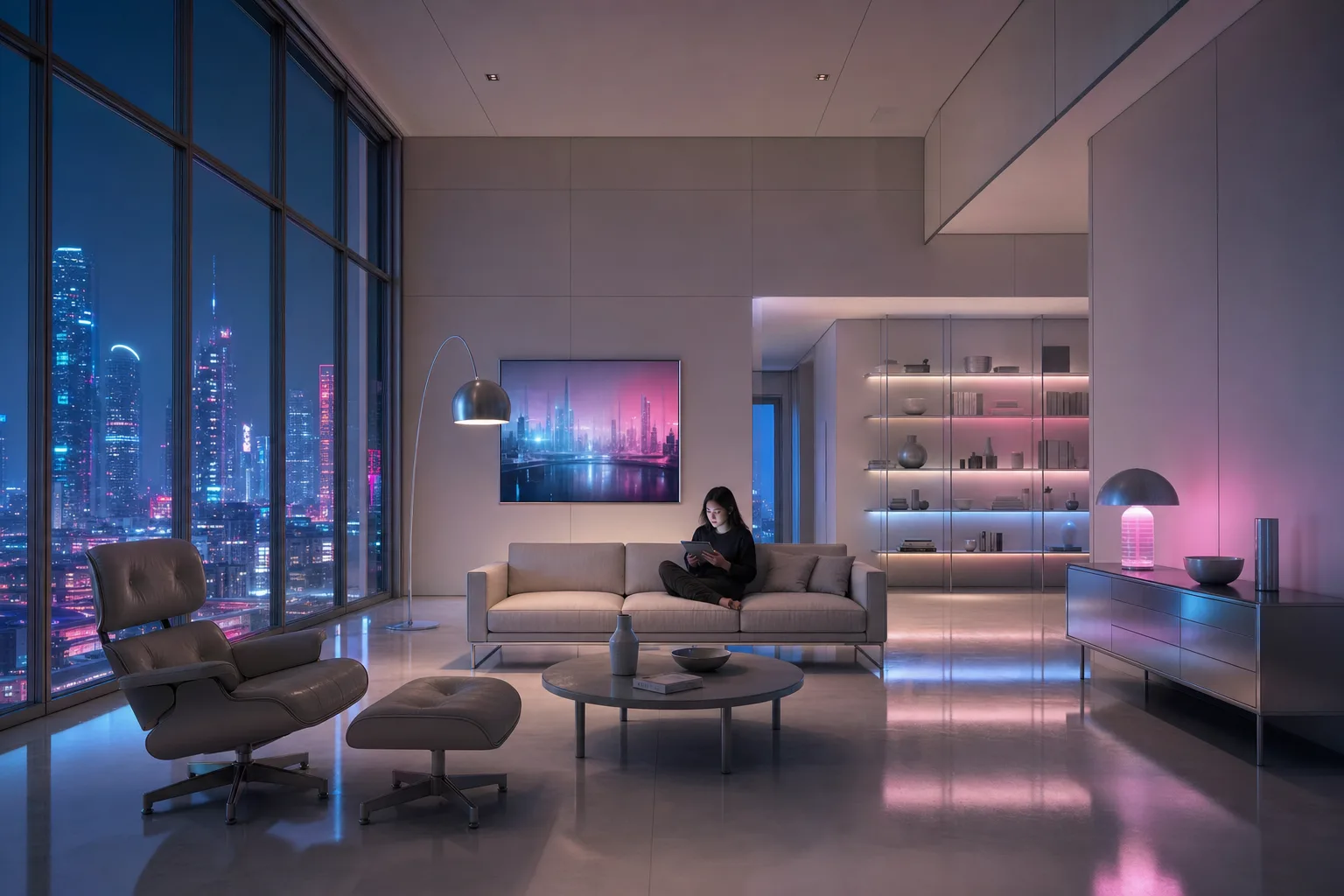
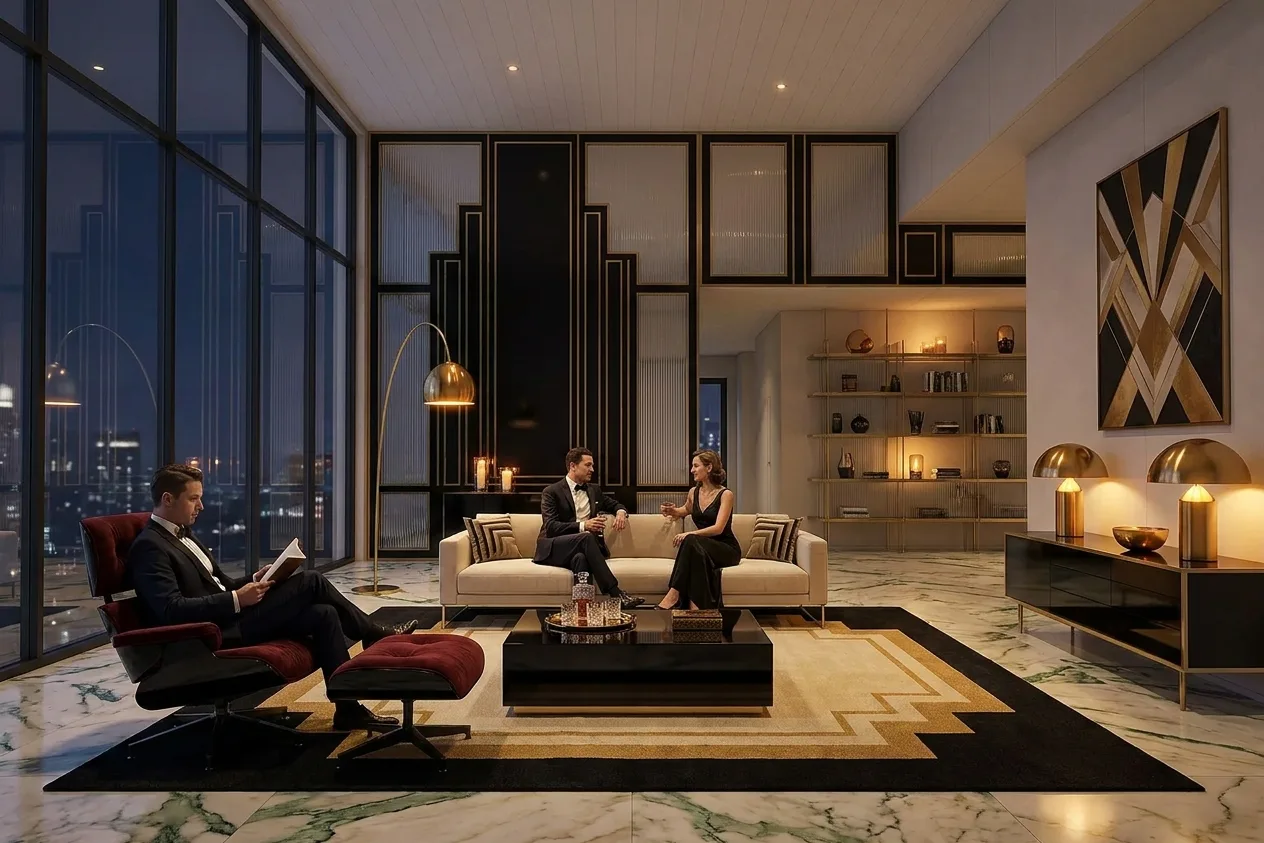
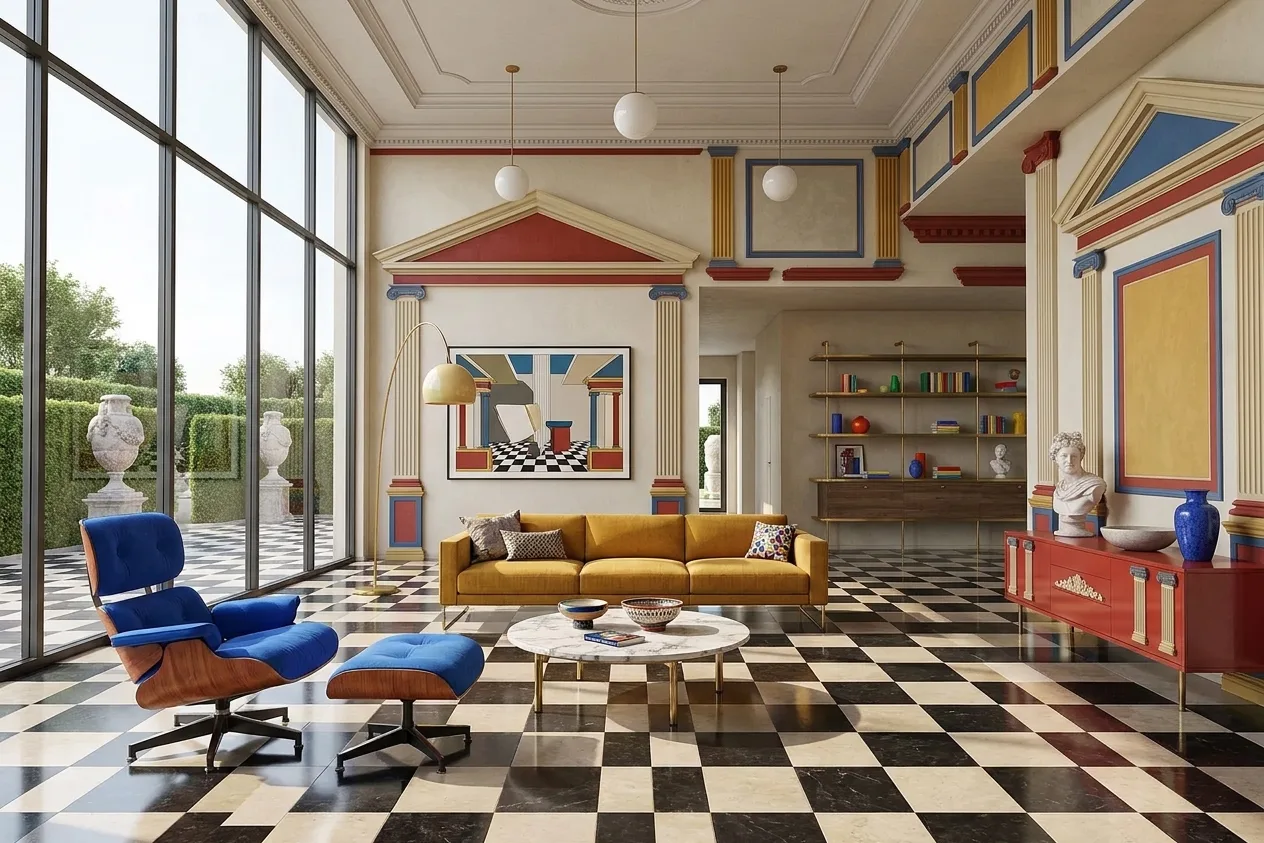
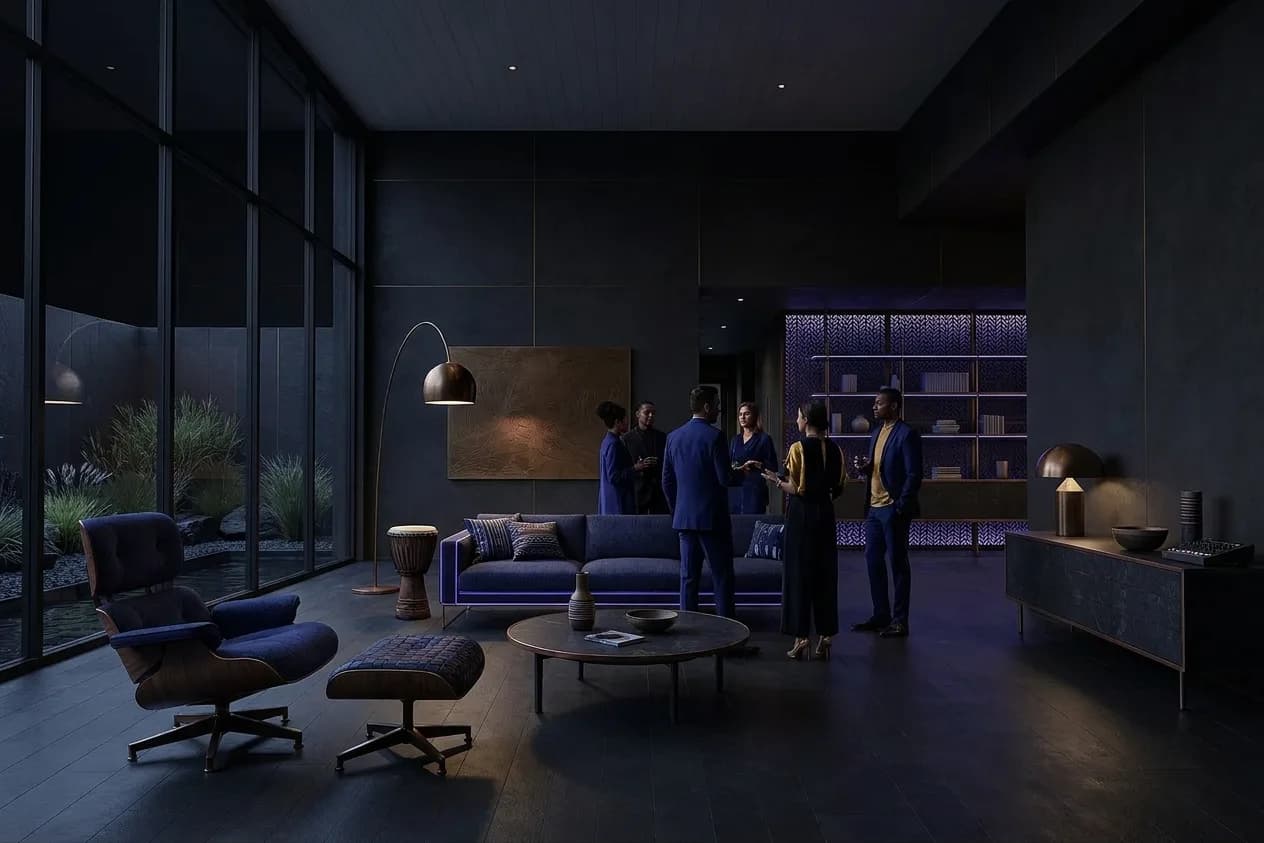
Same scene, same camera — only the style changes.
The composition
Applying this preset writes these five fields onto your project. Every one is editable after you apply it.
- Style
- An interwar Egyptian Revival language built from applied ornament, rich finishes, and formal furniture rather than altered architecture. Papyrus and lotus motifs repeat across screens, upholstery borders, cabinet fronts, and metal fittings. Ebony, lapis blue, gold leaf, and softly glowing alabaster create measured drama. Symmetry and strong color blocking give the existing shell ceremonial order. The result recalls 1920s decorative arts while remaining precise, inhabitable, and free from theatrical archaeological reconstruction.
- Scene
- The project sits within a nocturnal Egyptian context of pale stone, desert air, dark palms, papyrus, clipped greenery, and quiet water. A metropolitan edge or river-influenced landscape may surround it without becoming a reconstructed historic setting. Thresholds carry cool night air and restrained geometric rhythm between exposed ground and shelter. The broader atmosphere is composed, monumental, and mysterious, with sparse vegetation and mineral surfaces holding the memory of ancient forms without literal imitation.
- Lighting & Atmosphere
- Night surrounds a warm interior glow produced by alabaster lamps, shaded sconces, and concealed light grazing gold-leaf detail. Lapis surfaces deepen toward near-black at the edges, while ivory stone holds a soft amber luminosity. Reflections remain low and concentrated on polished metal or glazed accents. The atmosphere is formal, intimate, and slightly mysterious, recalling an interwar salon after dusk without resorting to torchlight, harsh theatrical beams, or excessive golden haze.
- Materials & Textures
- Ebony-stained timber anchors cabinetry and furniture, relieved by gold-leaf lines, aged brass, and deep lapis lacquer. Alabaster appears in lamp bowls, tabletops, and inset panels where it can glow softly. Upholstery combines midnight blue velvet with woven papyrus, lotus, and hieroglyphic-inspired borders. Floors use dark timber, black stone, or geometric rugs. Ornament stays shallow and applied, preserving existing surfaces while giving them a disciplined decorative layer.
- Entourage & Activity
- Low ebony chairs, a lacquered cabinet, and an alabaster table support a restrained evening gathering. Two figures in formal clothing converse beside books, a brass tray, and dark glassware. Papyrus stems or palm leaves appear in tall vessels, while small carved objects sit in deliberate pairs. Textiles and artwork carry the historical references. Activity remains quiet and social, avoiding staged ritual, archaeological props, or costume-driven spectacle.