Style Atlas / Postmodern Classicism
Postmodern Classicism
Classical fragments return as oversized applied ornament, colored panels, furniture, and graphic relief. Checkerboard stone and bright daylight keep the result formal, dramatic, and knowingly postmodern without altering the fixed enclosure.
InternationalPostmodernDramaticAll-seasonDaylight
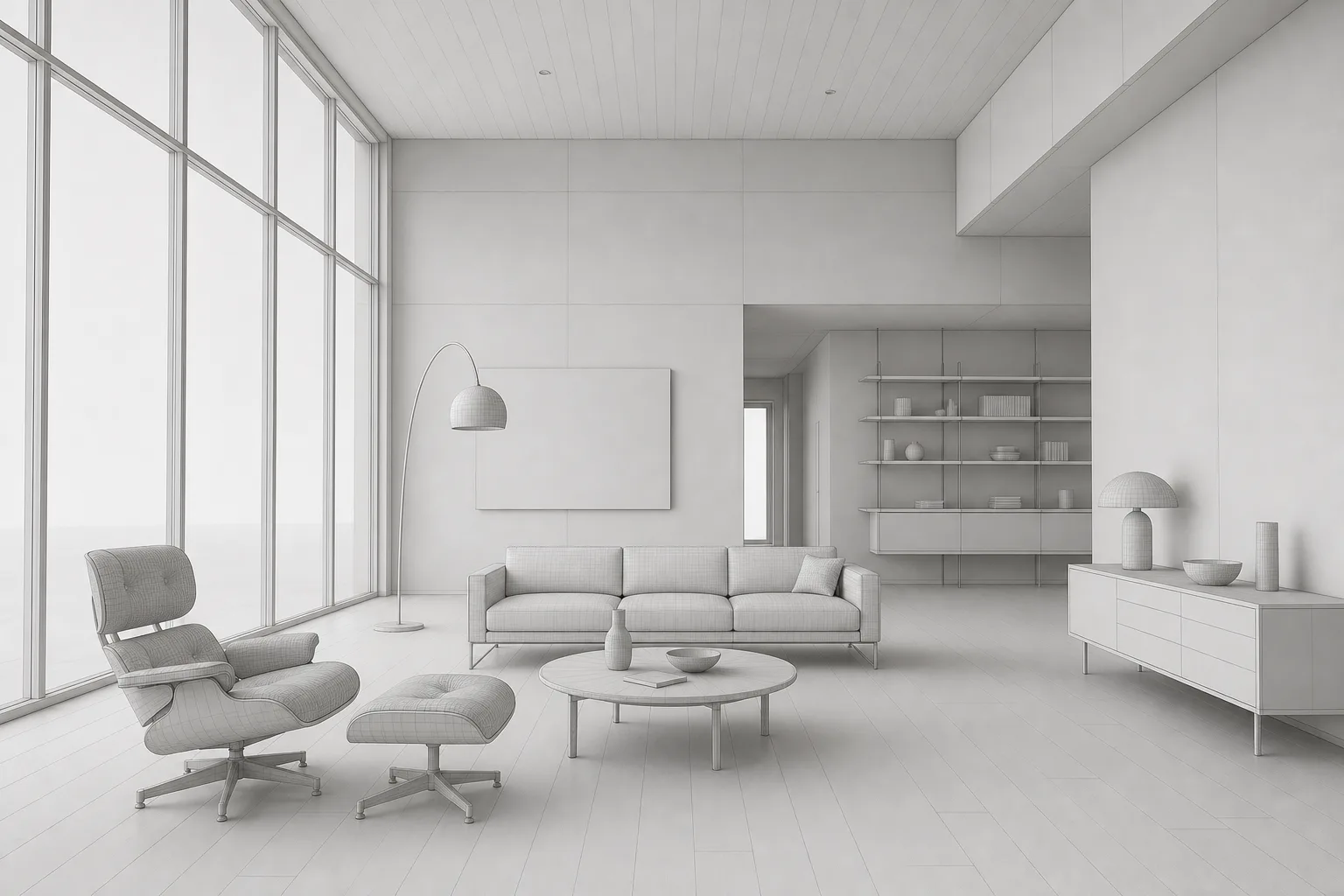
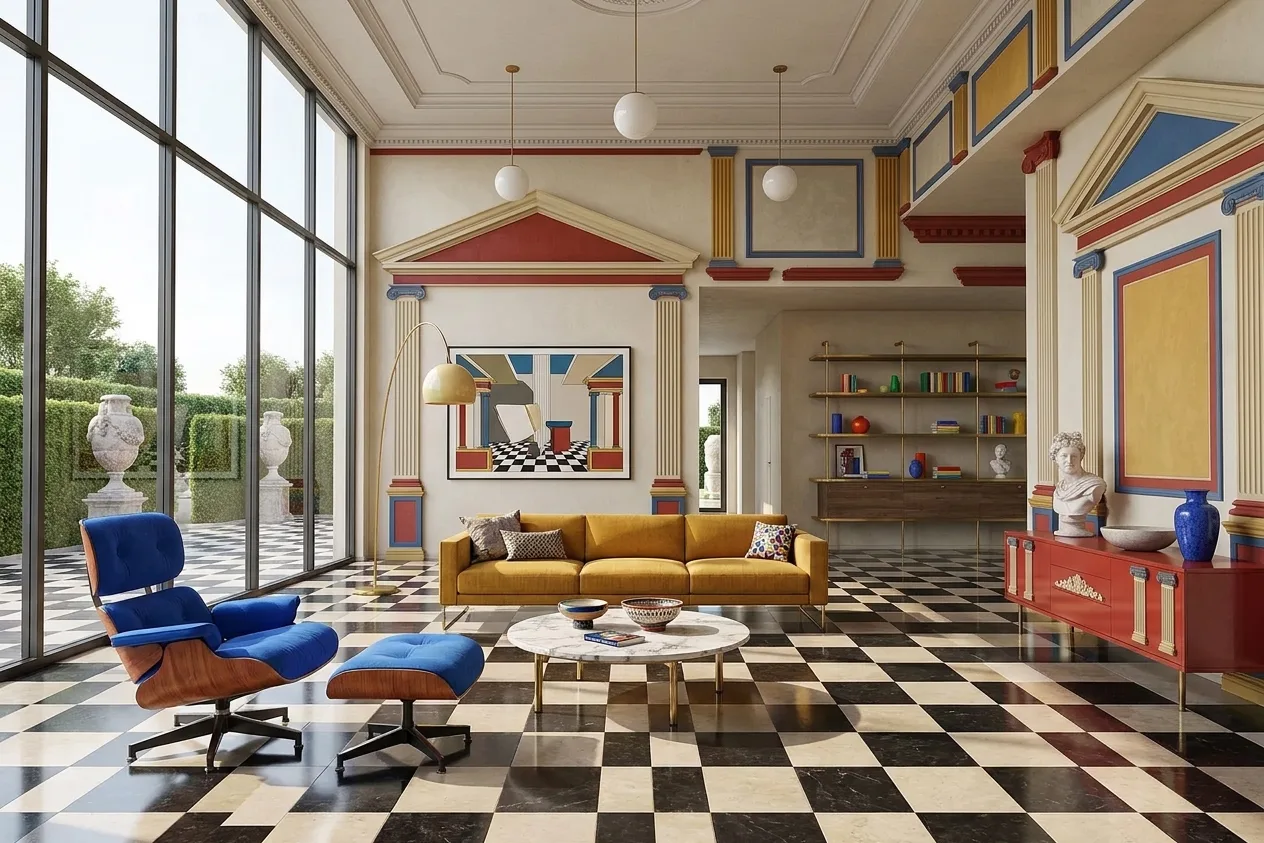
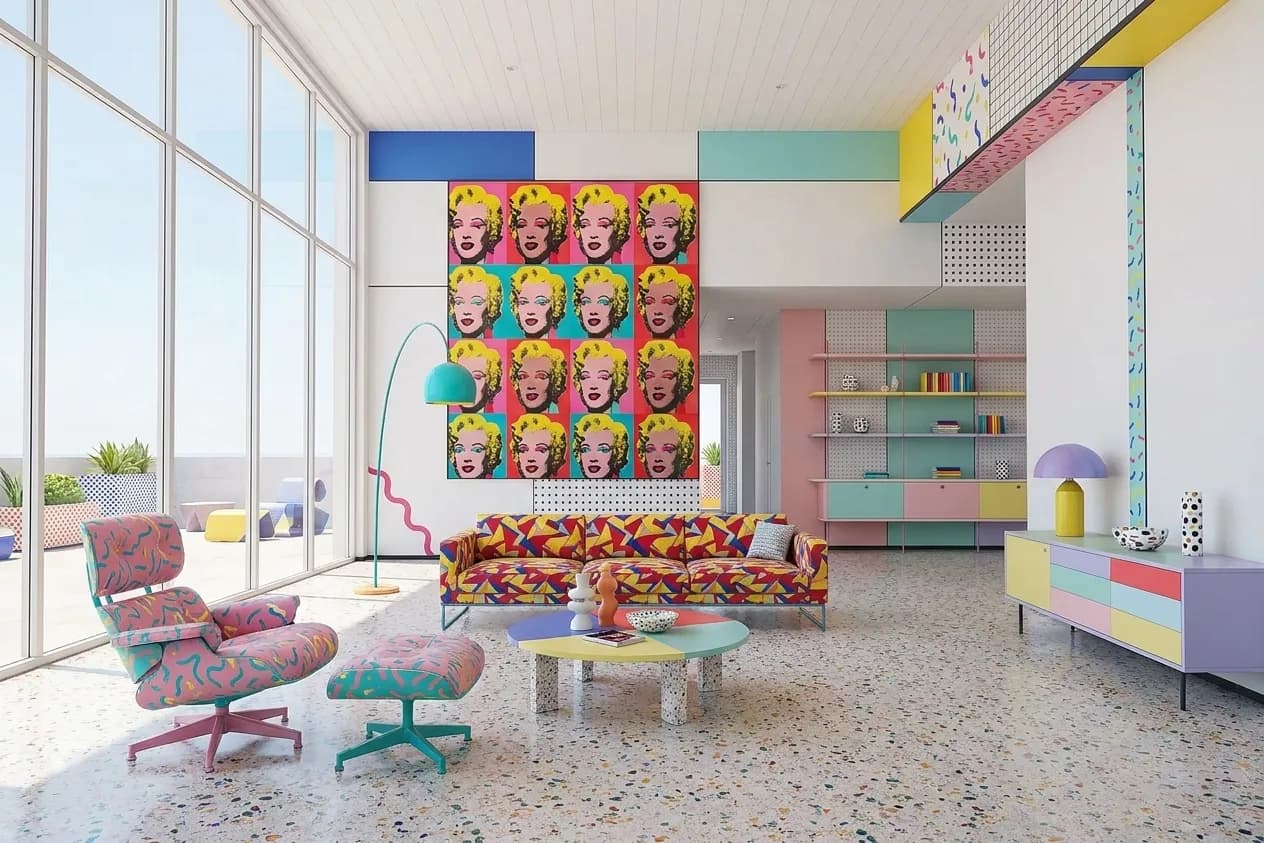
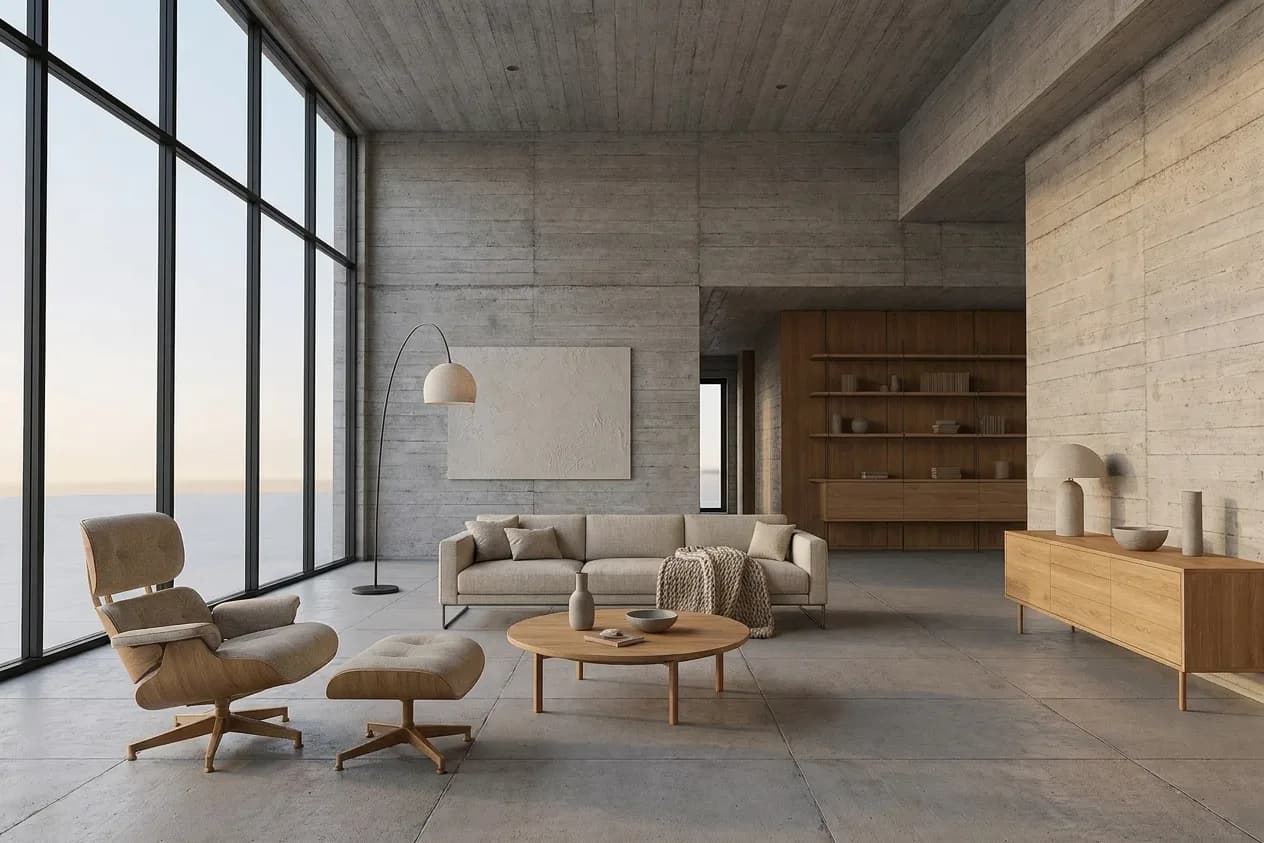
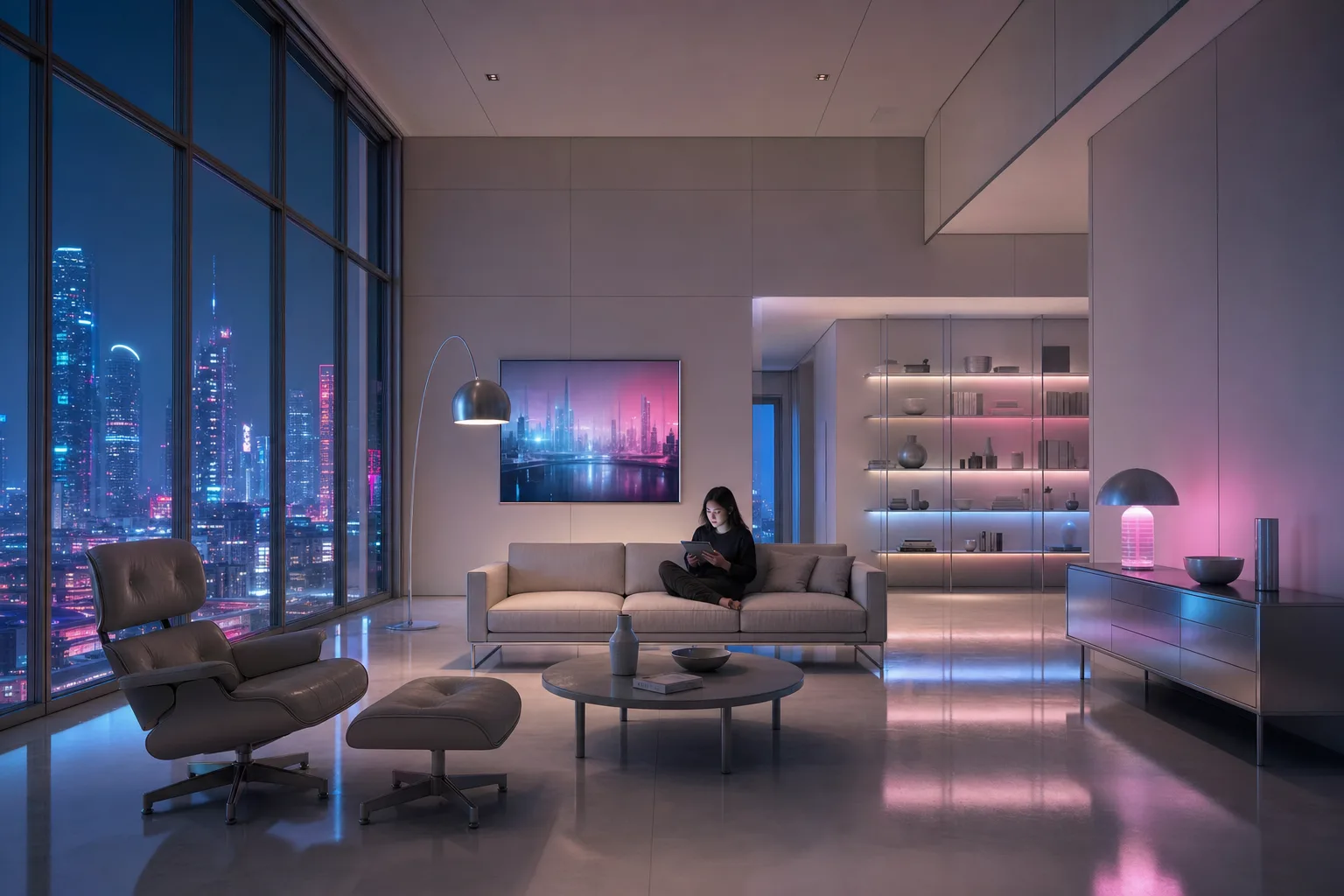
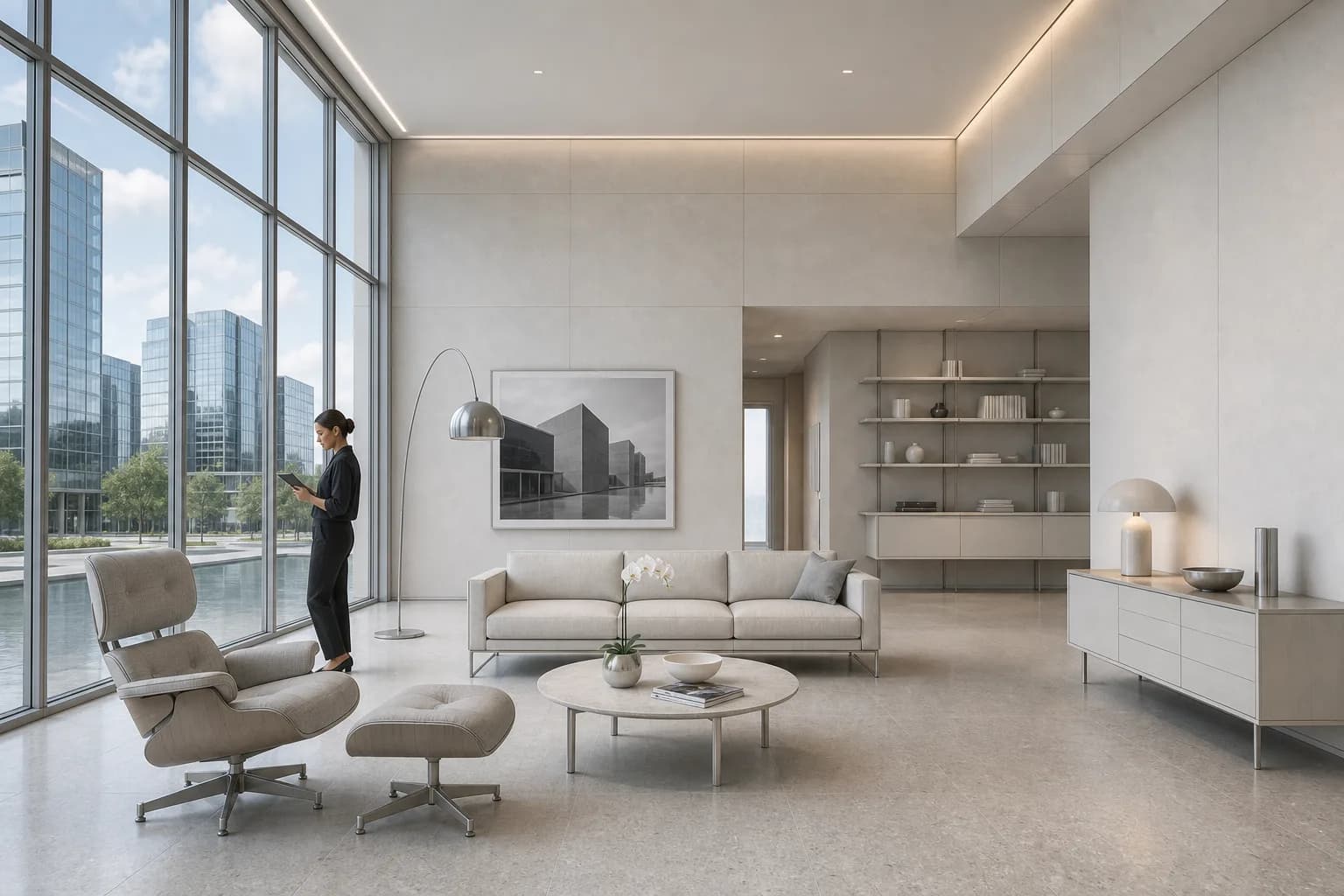
Same scene, same camera — only the style changes.
The composition
Applying this preset writes these five fields onto your project. Every one is editable after you apply it.
- Style
- Postmodern Classicism treats historical language as applied image rather than structural fact. Oversized keystones, flattened column profiles, pediment outlines, urns, and broken cornice motifs appear in wall panels, furniture, graphics, and fittings. Saturated color and checkerboard stone prevent literal revivalism. Existing walls, openings, and rooflines remain unchanged. The style is formal but knowingly exaggerated, using familiar classical fragments at improbable scale to create order, irony, and visual tension.
- Scene
- The project sits within a late-twentieth-century metropolitan context of clipped planting, stone paving, simple façades, and broad open ground. The surroundings feel public and ceremonial, yet a note of irony keeps them from becoming solemn. Thresholds mediate between formal order and expressive urban character through contrast, scale, and patterned surfaces. The broader atmosphere is confident, theatrical, and knowingly historical without imposing a singular purpose or fixed classical plan.
- Lighting & Atmosphere
- Bright daylight reveals every checkerboard joint, painted edge, and exaggerated decorative profile. Broad illumination keeps saturated red, blue, yellow, green, and cream distinct. Shadows from applied relief remain shallow but legible, clarifying that the classical elements are surface treatments rather than structure. Simple globe or cone fixtures add neutral fill. The atmosphere is crisp and assertive, balancing ceremonial order with the visual unease of altered scale and unexpected color.
- Materials & Textures
- Checkerboard stone in black and cream anchors floors, tabletops, and selected wall panels. Painted plaster, lacquered timber, and composite panels carry saturated color. Flattened column motifs and pediment profiles are applied as shallow relief, cabinetry fronts, screens, or freestanding decorative objects. Brass, marble veneer, terrazzo, and glossy ceramic provide selective richness. Crisp joints and hard color boundaries keep the historical references graphic rather than archaeologically convincing.
- Entourage & Activity
- Oversized urn lamps, pediment-backed cabinets, boldly scaled chairs, and symmetrical consoles establish the principal arrangement. Classical busts may appear in saturated finishes or unexpected materials. Figures gather formally, cross the scene, or pause beside a display. Accessories remain sparse and emphatic: a large clock, patterned rug, ceremonial bowl, or graphic book stack. Clipped shrubs and geometric planters continue the tension between familiar order and deliberate exaggeration.